Search Thermo Fisher Scientific
Disclaimer

Clicking the images or links will redirect you to a website hosted by BenchSci that provides third-party scientific content. Neither the content nor the BenchSci technology and processes for selection have been evaluated by us; we are providing them as-is and without warranty of any kind, including for use or application of the Thermo Fisher Scientific products presented.
Invitrogen
Fibrillarin Monoclonal Antibody (38F3)
Advanced Verification
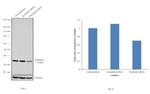
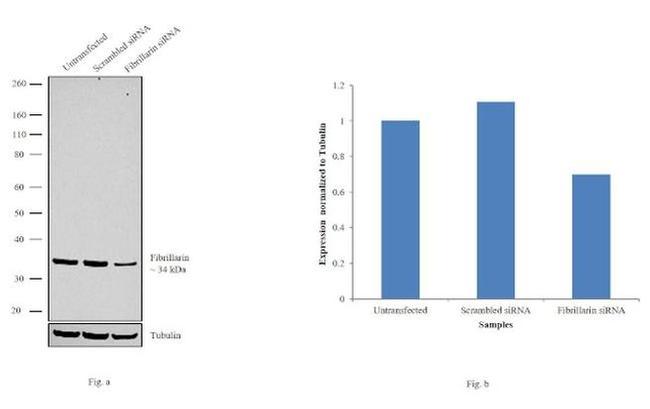
This Antibody was verified by Knockdown to ensure that the antibody binds to the antigen stated.

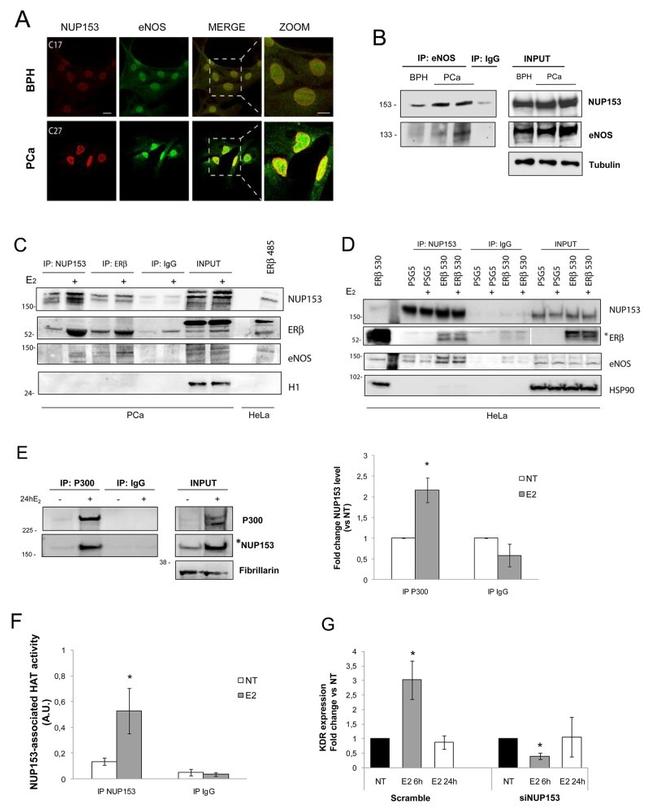
FIGURE: 1 / 14
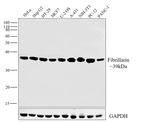
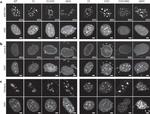
Fibrillarin Antibody (MA3-16771) in WB
Western blot analysis was performed on modified whole cell extracts (1% SDS) extracts (30 µg lysate) of HeLa (Lane 1), HepG2 (Lane 2), HT-29 (Lane 3), MCF-7 (Lane 4), U-2 OS (Lane 5), A-431 (Lane 6), NIH-3T3 (Lane 7), PC-12 (Lane 8) and PANC-1 (Lane 9). The blot was probed with Fibrillarin Monoclonal Antibody (38F3) (Product # MA3-16771, 1:1000 dilution) and detected by chemiluminescence using Goat anti-Mouse IgG (H+L) Superclonal™ Secondary Antibody, HRP conjugate (Product # A28177, 0.25µg/ml, 1:4000 dilution). A 39 kDa band corresponding... View More














Product Details
MA3-16771
Applications
Tested Dilution
Publications
Product Specifications
Species Reactivity
Bovine,
C. elegans,
Chicken,
Fruit fly,
Horse,
Human,
Mouse,
Plant,
Pig,
Rat,
Yeast
Published species
Human,
Mouse,
Plant
Host/Isotype
Mouse
/ IgG1
Class
Monoclonal
Type
Antibody
Clone
38F3
Immunogen
Yeast nuclear preparation (S. cerevisiae)
Conjugate
Unconjugated
Form
Liquid
Concentration
Conc. not determined
Storage buffer
tissue culture supernatant
Contains
5mM sodium azide
Storage conditions
Store at 4°C short term. For long term storage, store at -20°C, avoiding freeze/thaw cycles.
Shipping conditions
Wet ice
RRID
AB_2105791
Product Specific Information
Suggested positive control: antigen standard for FBL (transient overexpression lysate).
Target Information
Nop1p / Fibrillarin was originally identified as a nucleolar protein of bakers yeast, Saccharomyces cerevisiae (accession P15646). The Nop1p protein is essential for yeast viability and is localized in the nucleoli. The human homologue of Nop1p is fibrillarin (accession P22087) a component of the nucleolar small nuclear ribonucleoprotein (snRNP) particle. The human fibrillarin gene is located on chromosome 19 (19q13. 1).
For Research Use Only. Not for use in diagnostic procedures. Not for resale without express authorization.
Bioinformatics
Protein Aliases: 34 kDa nucleolar scleroderma antigen; 34-kD nucleolar scleroderma antigen; AT20009p; CG5725-PA; CG5725-PB; CG5725-PC; CG5725-PD; CG5725-PE; CG5725-PF; CG5725-PG; fbl-PA; fbl-PB; fbl-PC; fbl-PD; fbl-PE; fbl-PF; fbl-PG; Histone-glutamine methyltransferase; LD24618p; LP11571p; Nucleolar protein 1; pantothenate kinase; RNA, U3 small nucleolar interacting protein 1; rRNA 2'-O-methyltransferase fibrillarin; U6 snRNA 2'-O-methyltransferase fibrillarin
Gene Aliases: AL022665; CELE_T01C3.7; CG5725; Dmel\CG5725; Dmel_CG5725; dPANK; dPANK/Fbl; FBL; FIB; fib-1; FIB1; FLRN; PANK; RNU3IP1; T01C3.7
UniProt ID: (Human) P22087, (Rat) P22509, (Mouse) P35550, (C. elegans) Q22053
Entrez Gene ID: (Pig) 100626002, (Horse) 100064571, (Bovine) 538548, (Human) 2091, (Rat) 292747, (Mouse) 14113, (Fruit fly) 46234, (C. elegans) 179999
Molecular Function:
 RNA processing factor
kinase
transferase
metabolite interconversion enzyme
RNA processing factor
kinase
transferase
metabolite interconversion enzyme
box C/D snoRNA 3'-end processing
osteoblast differentiation
rRNA processing
tRNA processing
rRNA methylation
snoRNA localization
histone glutamine methylation
RNA processing
snoRNA metabolic process
methylation
mitotic cell cycle
response to oxidative stress
chromosome segregation
spermatogenesis
imaginal disc-derived wing morphogenesis
coenzyme A biosynthetic process
regulation of cytokinesis
locomotion
locomotor rhythm
oogenesis
meiotic cell cycle
membrane organization
triglyceride homeostasis
cellular response to gamma radiation
nucleologenesis
positive regulation of translation
TFIID-class transcription factor binding
RNA binding
protein binding
rRNA methyltransferase activity
poly(A) RNA binding
ATPase binding
histone-glutamine methyltransferase activity
rRNA (adenine-N6,N6-)-dimethyltransferase activity
protein C-terminal carboxyl O-methyltransferase activity
tRNA (guanine-N2-)-methyltransferase activity
methyltransferase activity
C-methyltransferase activity
N-methyltransferase activity
O-methyltransferase activity
S-methyltransferase activity
RNA methyltransferase activity
mRNA methyltransferase activity
tRNA methyltransferase activity
protein methyltransferase activity
2-polyprenyl-6-methoxy-1,4-benzoquinone methyltransferase activity
rRNA (uridine-2'-O-)-methyltransferase activity
rRNA (adenine-N6-)-methyltransferase activity
DNA-methyltransferase activity
tRNA (guanine-N1-)-methyltransferase activity
rRNA (cytosine-C5-)-methyltransferase activity
selenocysteine methyltransferase activity
arginine N-methyltransferase activity
protein-arginine N-methyltransferase activity
lysine N-methyltransferase activity
protein-lysine N-methyltransferase activity
tRNA (uracil) methyltransferase activity
tRNA (guanine) methyltransferase activity
tRNA (adenine) methyltransferase activity
tRNA (cytosine) methyltransferase activity
tRNA (cytosine-5-)-methyltransferase activity
tRNA (adenine-N1-)-methyltransferase activity
rRNA (adenine) methyltransferase activity
rRNA (cytosine) methyltransferase activity
rRNA (guanine) methyltransferase activity
rRNA (uridine) methyltransferase activity
transferase activity
protein C-terminal leucine carboxyl O-methyltransferase activity
1-phenanthrol methyltransferase activity
protein-arginine N5-methyltransferase activity
methylarsonite methyltransferase activity
dimethylarsinite methyltransferase activity
4,5-dihydroxybenzo(a)pyrene methyltransferase activity
1-hydroxypyrene methyltransferase activity
1-hydroxy-6-methoxypyrene methyltransferase activity
demethylmenaquinone methyltransferase activity
cobalt-precorrin-6B C5-methyltransferase activity
cobalt-precorrin-7 C15-methyltransferase activity
cobalt-precorrin-5B C1-methyltransferase activity
cobalt-precorrin-3 C17-methyltransferase activity
dimethylamine methyltransferase activity
hydroxyneurosporene-O-methyltransferase activity
tRNA (adenine-57, 58-N(1)-) methyltransferase activity
methylamine-specific methylcobalamin:coenzyme M methyltransferase activity
trimethylamine methyltransferase activity
methanol-specific methylcobalamin:coenzyme M methyltransferase activity
monomethylamine methyltransferase activity
P-methyltransferase activity
Se-methyltransferase activity
2-phytyl-1,4-naphthoquinone methyltransferase activity
tRNA (uracil-2'-O-)-methyltransferase activity
tRNA (cytosine-2'-O-)-methyltransferase activity
phosphomethylethanolamine N-methyltransferase activity
tRNA (cytosine-3-)-methyltransferase activity
rRNA (cytosine-2'-O-)-methyltransferase activity
rRNA (cytosine-N4-)-methyltransferase activity
trihydroxyferuloyl spermidine O-methyltransferase activity
pantothenate kinase activity
ATP binding

Performance Guarantee
If an Invitrogen™ antibody doesn't perform as described on our website or datasheet,we'll replace the product at no cost to you, or provide you with a credit for a future purchase.*
Learn more
We're here to help
Get expert recommendations for common problems or connect directly with an on staff expert for technical assistance related to applications, equipment and general product use.
Contact tech support